
Natural disasters, rising violence, economic hardship and political volatility – recent headlines can feel relentless. The pace and scale of these challenges can be difficult to process, let alone respond to.
Across Australia and globally, rising inequality, climate pressures and political division are reshaping the context for efforts to create positive change. Amid this complexity, there are enormous opportunities, particularly when advocates and communities come together to build the momentum needed to turn policy ideas into real change.
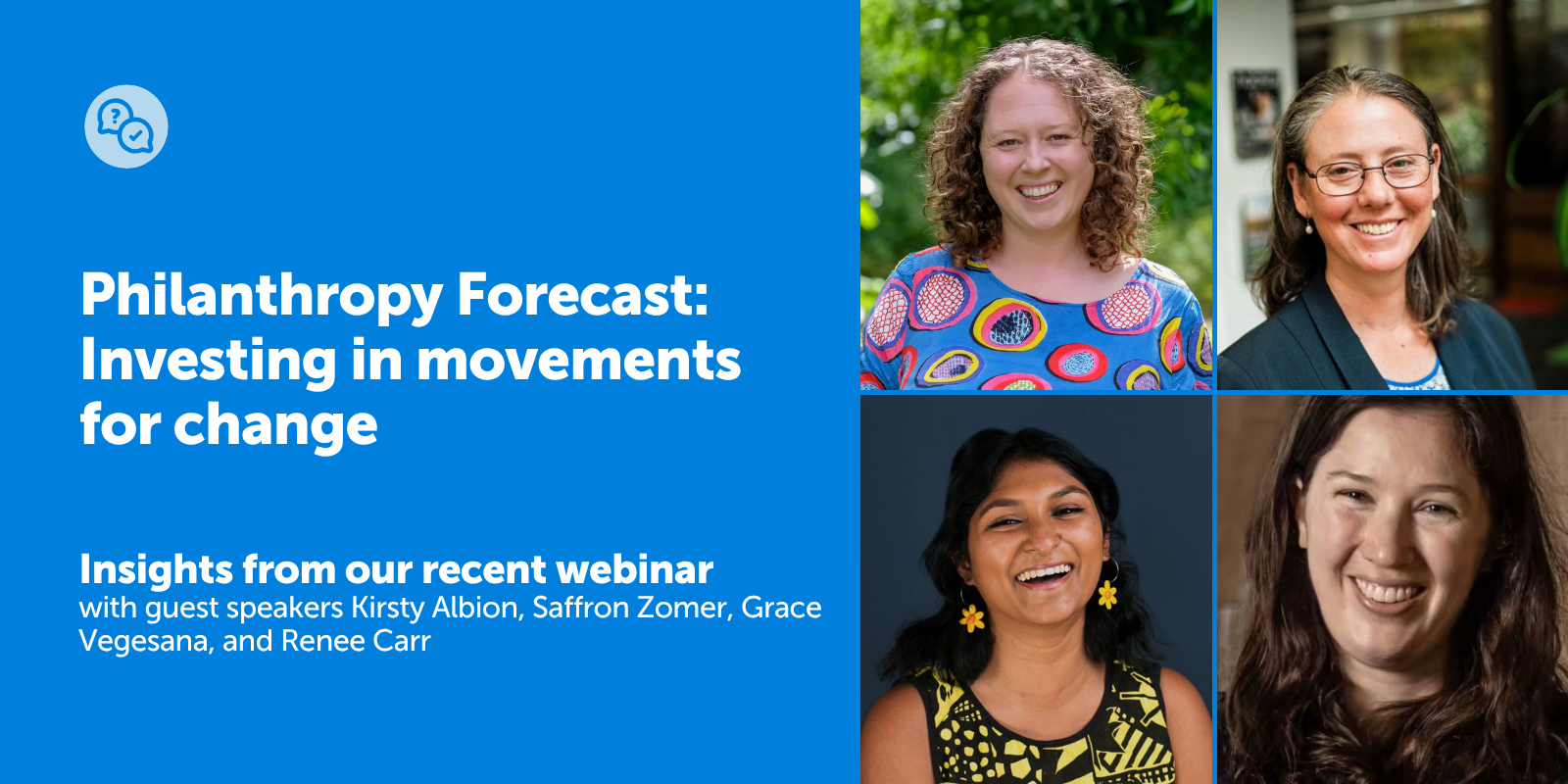
Australian Communities Foundation recently hosted a Philanthropy Forecast webinar with four changemakersto discuss the political, social and climate forces shaping Australia in the year ahead. Joined by Kirsty Albion, CEO of Australian Progress, Saffron Zomer, Executive Director of the Australian Democracy Network, Renee Carr, Executive Director of Fair Agenda, and Grace Vegesana, National Director of the Australian Youth Climate Coalition (AYCC), we explored the ways in which philanthropy can respond to this challenging landscape.
Stronger together
Though their backgrounds and focus areas varied, our speakers repeatedly returned to the same idea: the big issues of today are deeply connected, and real change happens when people work together.
“Young people today are acutely aware that the climate crisis does not exist in isolation – it is deeply tied to economic inequality, colonial histories, and the health of democratic institutions,” shared Grace.
“Being stronger together means recognising the unique skills and strengths each organisation brings. As social movements and civil society organisations, we all have specific areas of focus – and we need those. No single organisation can solve everything alone,” said Grace.
This recognition of shared strengths and collective power was a common theme throughout the discussion. Acknowledged as vital in responding to complex social challenges, successful collaborations aren’t born overnight; they require consistent time and effort to develop.
When organisations choose to collaborate, they’re deliberately investing their time. It is a signal to funders: if organisations are prioritising working together, it’s because they see strategic value in it.
“When organisations choose to collaborate, they’re deliberately investing their time; it always takes more than working alone,” said Saffron. “It is a signal to funders: if organisations are prioritising working together, it’s because they see strategic value in it. They know they can achieve more collectively than they could separately.”
The power of sustained, untied funding
Emphasising the importance of sustained investment in advocacy, coalition and movement-building work was another theme that surfaced throughout the discussion.
As Kirsty reflected, meaningful social change rarely happens through policy engagement alone. Instead, it requires building public momentum and collective power that shifts what is politically possible.
“The only thing more effective than organised money is organised people. That’s what movement building is – ensuring people can shape the decisions that affect their lives,” said Kirsty.
Advocacy and community organisations play a critical role in building this collective power – bringing communities together, shifting public narratives and creating the conditions for policy change – but this work often struggles to attract consistent funding. Movement building involves long-term organising, relationship building and community engagement, impact measures that are harder to track within traditional project-based funding cycles.
The only thing more effective than organised money is organised people. That’s what movement building is – ensuring people can shape the decisions that affect their lives.
Flexible philanthropic support can make a transformative difference: “Making gifts that are untied and multi-year can be absolutely game changing,” said Renee. “It allows organisations to focus on the most strategic opportunities and to build the movement infrastructure that is critical to achieving change.”
Long-term, untied funding provides organisations with the stability to invest in training advocates, building networks and mobilising communities – work that strengthens the community leadership and coalitions needed to secure a more equitable and sustainable future.
If you’re an ACF Fundholder and would like to further discuss opportunities for your giving, contact our Philanthropy Team.