

When bushfires swept through Victoria’s Strathbogie region earlier this year, the speed and scale of the impact were immediate and devastating.
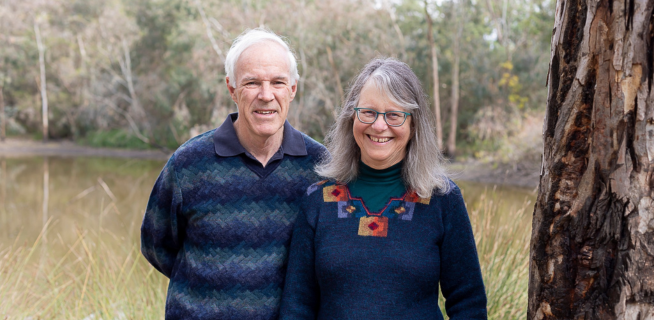
While, fortunately, there was limited loss of life, the fires tore through townships destroying homes and community facilities along with vast areas of agricultural land, resulting in the destruction of fencing, equipment and livelihoods across farming communities. “Where people could protect their homes, they often lost just about everything else on their farms,” reflects Carolyn Munckton, a local resident and one of the driving forces behind the Strathbogie Disaster Relief Fund (SDRF).
In the early days, the gaps were clear. While traditional disaster response mechanisms support community organisations and longer-term recovery, there was an urgent need for immediate, direct support for individuals, families and local businesses.
“We wanted to respond quickly – not in months, but in days,” Carolyn says.
A fund built in days, for immediate impact
With a background in philanthropy and an existing Fund with Australian Communities Foundation (ACF), Carolyn had a strong understanding of giving structures. She quickly identified an opportunity to utilise the Community Charity Trust (CCT) – a new structure designed to enable more flexible, responsive giving, introduced at ACF in late 2025.
Recognising the need for a rapid response, the ACF team worked alongside Carolyn to establish the Disaster Fund for the Strathbogie and Mitchell Shires – the first of its kind – in just four days.

That responsiveness was critical. We were able to set up something fit-for-purpose, right when the community needed it most.
“That responsiveness was critical,” Carolyn says. “We were able to set up something fit-for-purpose, right when the community needed it most.”
Unlike traditional giving funds, the Community Charity enables local communities like Strathbogie to distribute funds directly to individuals and businesses – a crucial difference in a disaster context, where financial support is often needed immediately to stabilise livelihoods.
Within just a few weeks, the Fund had raised approximately $250,000 and had begun distributing rapid-response grants of $1,000–$2,000 to affected households. As of March 2026, the Fund raised over $420,000 and supported over 100 households.
It was about getting something meaningful out quickly – helping people take the next step
“We know that amount won’t solve everything,” Carolyn says. “But it was about getting something meaningful out quickly – helping people take the next step.”
Community-led, with lived experience at the centre
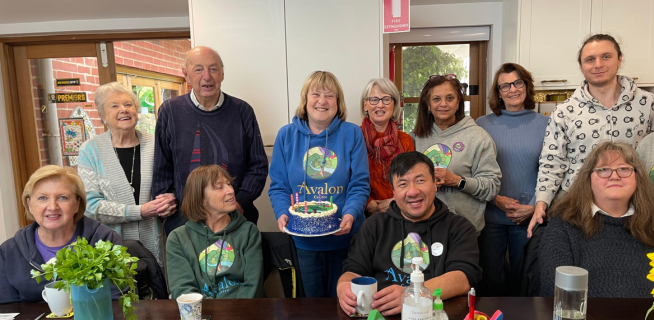
At the heart of the Fund is an advisory committee made up of people with deep connections to the region and lived experience of natural disasters – a defining feature of the Fund’s community-led approach.
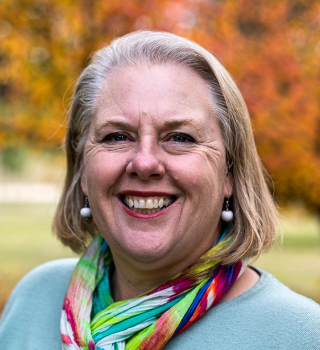
“We wanted it to be community-driven, community-informed and trauma-informed,” Carolyn explains.
This local knowledge proved essential. Committee members understood which areas had been impacted and which families needed support. Drawing on a diversity of skills and experience, and supported by ACF’s partnership and expertise, the committee designed processes that were both accessible and accountable.
That balance, between speed, trust, and accountability, was really important
Applications were intentionally kept simple, with an online process supported by hands-on assistance as needed – particularly for those facing connectivity challenges due to the fires. At the same time, appropriate governance and verification processes ensured the money was distributed responsibly.
“That balance, between speed, trust and accountability, was really important,” Carolyn says.
A new model for disaster giving
The Strathbogie Disaster Relief Fund reflects a growing shift in how communities approach disaster philanthropy.
In the absence of a local community foundation in Strathbogie, the Community Charity provided a ready-made, scalable structure that could be activated quickly – without the delays typically associated with establishing new entities.
It also offered a trusted alternative to informal fundraising platforms.
“There’s often concern about where donations go and how much is lost to fees,” Carolyn says. “We wanted to be able to say with confidence that the vast majority of funds were going directly back to the community.”
Just as importantly, the Fund demonstrates the power of local leadership, combined with national infrastructure. While ACF provided the governance framework and philanthropic expertise, the Strathbogie Disaster Relief Fund was shaped and delivered by people embedded in the community.
“It’s been incredibly rewarding to see what’s possible when you bring those things together,” she reflects.
Looking ahead
While the Strathbogie Disaster Relief Fund began as a rapid response, its ambitions extend beyond the immediate aftermath of the fires.
“There’s still so much work to be done,” Carolyn says. “Recovery takes time and continued support.”
As climate-related disasters become more frequent and severe, models like the Strathbogie Disaster Relief Fund offer an important blueprint for future responses: fast, flexible, community-led and built on trust.
There’s still so much work to be done. Recovery takes time and continued support.
For ACF and its Fundholders, the Fund also highlights the evolving role of philanthropy – not just in responding to crises, but in enabling communities to lead their own recovery.
In moments of disaster, speed matters. But as the Strathbogie Disaster Relief Fund shows, impact depends just as much on who leads, how decisions are made, and where funding flows.
When local leadership, trust and timely support align, philanthropy can meet moments of crisis with impact that is immediate, meaningful, and deeply community-driven.
Learn more and get involved
Support the Strathbogie Disaster Relief Fund | Read more about the Fund