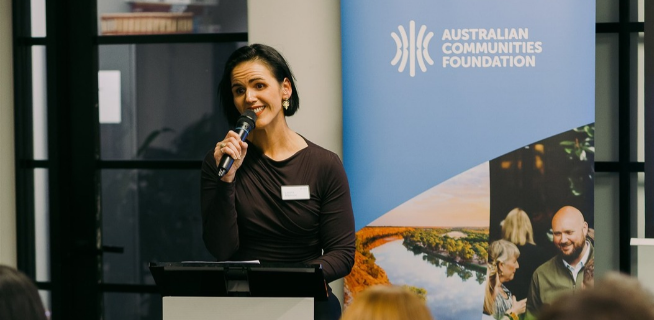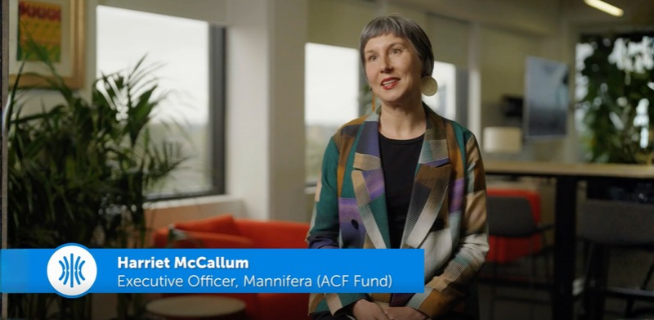

Over recent months, Australian Communities Foundation Fundholders have come together at Fund Forums across the country to hear from community leaders, explore pressing challenges and reflect on the role philanthropy can play in creating change.
These conversations brought an important question into focus. When thinking about our giving, we often start with the causes we care about. But it’s equally important to ask: What kind of change do I want my giving to support?
The answer isn’t always straightforward. Some funders are drawn to meeting immediate needs, while others focus on preventing problems before they occur or tackling their root causes.
Four pathways to change
One useful way to think about giving is through four connected pathways to change:
- Alleviate: Meeting immediate needs for individuals and communities.
- Stabilise: Maintaining organisations, services and functions.
- Improve: Enabling organisations and systems to get better at what they currently do.
- Transform: Enabling long-term shifts in the systems and conditions that shape people’s lives.
These pathways sit on a spectrum from ‘downstream’ responses that address the immediate effects of a problem to ‘upstream’ approaches that seek to change the underlying systems and conditions that create it. Originally developed for the Philanthropy, Systems and Change report by Paul Ramsay Foundation, Dusseldorp Forum, Perpetual and TACSI, this framework can help funders think more clearly about the contribution they want to make.
Each pathway offers distinct strengths and trade-offs.
Funding that alleviates need can deliver immediate, tangible outcomes. People receive support when they need it most, whether that’s emergency housing, food relief or crisis services. The impact is often visible and urgent, but this work may not reduce the factors causing people to need support in the first place.
Funding that stabilises organisations helps sustain essential services, leadership and infrastructure. While this support may be less visible than frontline programs, strong organisations are often the foundation that makes both immediate assistance and longer-term change possible.
Funding that improves organisations and systems can strengthen outcomes over time through organisational capacity, innovation, early intervention and prevention. The benefits may take longer to emerge, but can reduce demand for crisis responses and increase impact over the long term.
Funding that seeks to transform systems often focuses on research, advocacy, community organising and policy change. This work can influence change at scale by addressing root causes, but progress is typically long-term, uncertain and difficult to attribute to any single grant.
For this reason, many funders adopt a portfolio approach, balancing support for immediate needs with investments in organisational capacity and systems change work.
What does this mean for your giving?
One of philanthropy’s greatest strengths is its flexibility. It can respond quickly when communities need support, provide sustained funding for essential organisations, and back new ideas or approaches that may struggle to attract funding elsewhere. It can also support advocacy, community leadership and systems change efforts that often sit outside other short funding cycles.
At our recent VIC Fund Forum, Rueben Berg spoke about the importance of sustained support for Treaty and First Nations self-determination, while Victorian Council of Social Service (VCOSS) CEO Juanita Pope highlighted philanthropy’s unique capacity to support long-term, systemic change alongside essential services that meet immediate community needs.
These themes were echoed across the country. In Western Australia, Louise Giolitto from WACOSS discussed rising homelessness and financial pressures on families. In Queensland, Professor Rowena Maguire from QUT’s Centre for Justice explored community-led responses to climate change, while in New South Wales, Sydney Alliance’s Diana Olmos and Kristyn Crossfield shared how communities are building collective power for a fairer energy transition.
Together, these conversations reinforced that meaningful change rarely follows a single pathway. It often requires different approaches working together, supported by funders who recognise the value of each.
Finding your own approach
Exploring pathways to change doesn’t necessarily mean changing the causes you support. Instead, it can help clarify how you want your giving to contribute.
For example, if you’re passionate about food security, you might support emergency food relief, invest in early-intervention programs, strengthen the capacity of trusted community organisations, or support advocacy to improve the systems that shape access to affordable food. Each contributes to change in a different way.
As you consider future grants, it can be useful to ask:
- Which pathway is this work contributing to?
- How soon might communities experience the benefit?
- What role is this organisation playing within the broader ecosystem of change?
- What risks or uncertainties am I comfortable funding?
- How long might change take, and what would meaningful progress look like along the way?
If you’d like to reflect further on how your giving contributes to change, I encourage you to spend some time with the Pathways to Change worksheet, adapted from the Giving Conversation tool in the Philanthropy, Systems and Change report, kindly shared by our friends at TACSI.
You can also download ACF’s Good Giving Toolkit, featuring 17 practical worksheets to help you reflect on your giving and refine your giving strategy.