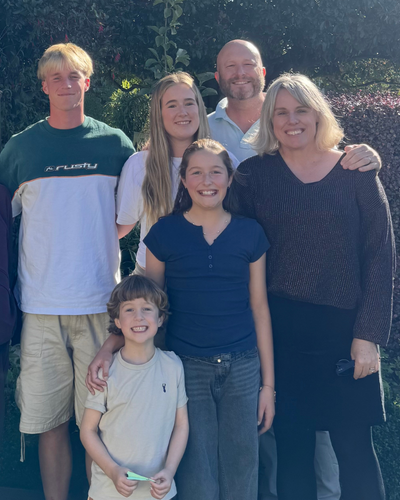
Sally Hines has built her career at the intersection of people and purpose – working across social enterprise, partnerships and leadership to connect individuals and organisations with meaningful pathways to impact. Along the way, she has seen firsthand how the right support, at the right moment, can unlock lasting change. Now, as Director of Engagement and Advisory at Australian Communities Foundation (ACF), Sally brings that perspective to philanthropy, helping Fundholders and Clients shape their giving in ways that are thoughtful, strategic, and aligned with their values.
We sat down with Sally to learn more about what drew her to ACF, her experience across the for-purpose sector, and what she’s most excited about in her new role.
What drew you to Australian Communities Foundation?
What really drew me to ACF is the idea of people coming together around a shared purpose – a community of philanthropy. The values, vision and purpose of the organisation felt deeply aligned with the work I’ve done throughout my career.
I see ACF as an enabler of the broader for-purpose ecosystem – supporting the people and organisations doing the work on the ground, and helping them go further through thoughtful, values-led giving.
I’ve spent most of my professional life in the not-for-profit sector, so moving into philanthropy felt like a natural next step. I see ACF as an enabler of the broader for-purpose ecosystem – supporting the people and organisations doing the work on the ground, and helping them go further through thoughtful, values-led giving.
Can you tell us more about your professional journey and how it’s led you here?
I’ve always worked in the for-purpose sector, mostly in roles focused on engagement, partnerships, and business development. In my time at Leadership Victoria, I worked on designing leadership programs for organisations, helping them identify challenges within their workforce and develop tailored solutions.
Our work at ACF in advising clients is similarly about understanding what people are trying to achieve, asking the right questions, and working together to design a pathway forward.
How does ACF’s approach to philanthropy resonate with you?
One of the things that really draws me to philanthropy, and the way ACF approaches it, is that it’s relational rather than transactional.
In my experience working in not-for-profits, funding relationships can often feel quite transactional, particularly when tied to government funding. Philanthropy offers something different. It allows for deeper relationships, and for funding that can support innovation and organisations that might otherwise be overlooked.
One of the things that really draws me to philanthropy, and the way ACF approaches it, is that it’s relational rather than transactional.
What causes are you most passionate about?
Housing and employment are two areas that have always been front of mind for me.
Through my work at The Big Issue and Homes for Homes, I’ve seen firsthand how critical it is for people to have a safe and stable place to live. Having a home creates a foundation for everything else. Similarly, employment provides more than just income; it offers a sense of identity, purpose and belonging.
For me, it comes back to giving people access to choice… I’m really motivated by work that expands those choices and supports people to move forward.
For me, it comes back to giving people access to choice. When you’re experiencing disadvantage, the range of choices available to you is often limited. I’m really motivated by causes that expand those choices and support people to move forward – whether that’s a second chance, or a fifth, or a hundredth.
What keeps you inspired outside of work?
I’m currently on the board of StreetSmart, which supports grassroots organisations working in the homelessness sector. That keeps me connected to what’s happening on the ground and the incredible work of frontline organisations.
Outside of that, I’m an avid reader. I love fiction – it’s a complete escape. I actually got married at the State Library, so that probably tells you everything you need to know! Books are definitely my happy place.
What excites you about stepping into this role?
I’m naturally very curious, and I really enjoy getting to know people – understanding what motivates them and what they’re hoping to achieve through their philanthropy.
I’m excited to be part of the journey, to support our Fundholders and Clients in realising their goals, and to help them navigate how they can have the greatest possible impact.
If you or anyone you know is thinking about how to take that next step with your giving, I’d love to have a conversation about how we can connect your passions with pathways to make a real difference. Give me a call on 03 9412 0412 or send us an email: [email protected]
Australian Communities Foundation is delighted to welcome two new Directors to our Board: Kate Fazio and Dr Tessa Boyd-Caine. Both leaders bring a wealth of experience across social impact and governance, strengthening our capacity to serve our giving community.
Kate Fazio comes to Australian Communities Foundation (ACF) with a track record of designing solutions that break down barriers and create impact at scale. Over 12 years at Justice Connect, she led the design and development of innovative digital tools and programs such as the global Pro Bono Portal, a diagnostic AI system and an outreach program that now connects hundreds of thousands of people with legal help.
Through her consulting business, Kate advises clients on a range of social impact, social investment, innovation, technology and legal industry issues. She specialises in designing initiatives that leverage new thinking in social innovation and technology to deliver impact at scale.
I’m excited to contribute my experience in innovation and systems design to help the Foundation continue to support positive impact
“ACF plays a unique role supporting best-practice structured giving in Australia, providing critical infrastructure and advice to hundreds of Funds,” said Kate, reflecting on her decision to join the Board. “I’m excited to contribute my experience in innovation and systems design to help the Foundation continue to grow its reach and support positive impact for communities across the country.”
For Tessa Boyd-Caine, the thread running through her career has been a commitment to justice and wellbeing. Originally a criminologist, she has worked in health, criminal justice and human rights organisations in Australia and internationally. In February 2025, she was appointed CEO of Australia’s National Research Organisation for Women’s Safety (ANROWS). Previously, Tessa was the founding CEO of Health Justice Australia and Deputy CEO of the Australian Council of Social Service (ACOSS).
Philanthropy is still sometimes seen as a one-way act of generosity, but real change happens when giving becomes a genuine partnership
Tessa is a graduate of the Australian Institute of Company Directors and was the inaugural Fulbright Professional Scholar in Nonprofit Leadership. She combines her passions for enabling young people to thrive and for arts and culture as Chair of Gondwana Choirs. She is also the Chair of the Australian Pro Bono Centre, providing leadership for the growth and excellence of pro bono legal services.
Reflecting on her new role, Tessa said she is particularly excited by ACF’s commitment to working in partnership with communities.
“Philanthropy is still sometimes seen as a one-way act of generosity, but real change happens when giving becomes a genuine partnership. Communities bring knowledge, experience, and resources of their own, and philanthropists have much to learn from them. I’m looking forward to helping ACF continue to build philanthropy as an act of partnership – one that fosters deeper collaboration and greater impact.”
Tessa and Kate are both extraordinary leaders… Their diverse expertise will help guide ACF through its next strategic phase
ACF Chair Fiona McLeay said the appointments come at an exciting time for the Foundation.
“Tessa and Kate are both extraordinary leaders who share our vision for a fairer and more sustainable Australia. Their diverse expertise will help guide ACF through its next strategic phase and deepen our impact with our growing giving community.”
North America often looms large in the philanthropic imagination. It’s home to some of the world’s most storied foundations, biggest givers, and boldest initiatives.
But after two weeks of meetings and conversations across Canada and the United States, I returned home with a powerful reminder: the most effective and innovative philanthropy isn’t confined to one part of the world. Best practice lives here, too.
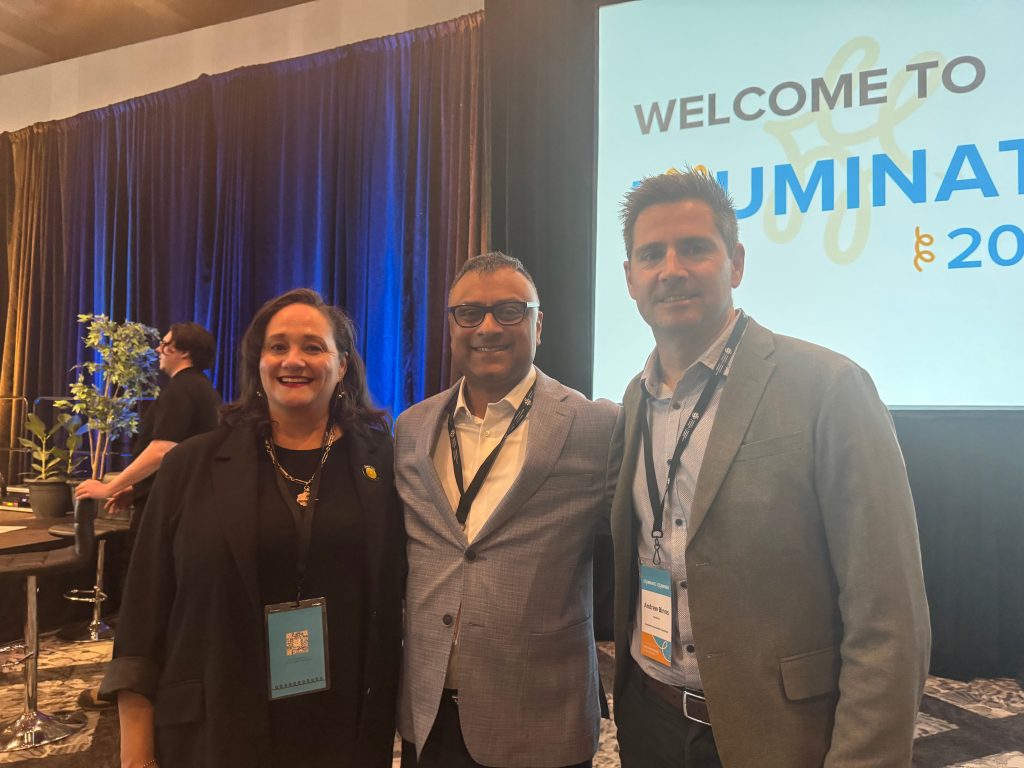
While in North America, I attended Illuminate, the 2025 Community Foundations of Canada conference – a vibrant gathering of place-based funders from across the country and beyond.
I also met with leading funders and movement builders, including the Vancouver Foundation, Toronto Community Foundation, Marin Community Foundation, Stanford’s Center on Philanthropy and Civil Society, Monitor Institute, Philanthropy Together and networks such as Solidaire, Justice Funders, and Women Moving Millions.
The conversations were diverse, but a few key lessons stood out.
1. Philanthropy isn’t neutral – it’s a chance to shape the future
Across conversations, one message came through clearly: the role of philanthropy isn’t just to give support, but to help shape a better future. The most impactful givers are doing more than writing cheques. They’re embracing their roles as stewards, advocates, and learners. They’re aligning investments with purpose. And they’re supporting systems change, not just service delivery. This shift is as relevant for individual givers as it is for large institutions. Philanthropy isn’t about control or charity – it’s about working in solidarity with communities and building partnerships around the kind of future we want to see.
2. Donor-advised funds are reshaping access to giving
Across North America, donor-advised funds (DAFs) continue to rise as the philanthropic vehicle of choice. Their growing popularity stems from one clear insight: making structured giving more accessible empowers more people to participate in long-term, intentional philanthropy. By offering flexibility, tax-effectiveness, and strategic support, DAFs are helping a broader spectrum of givers move from reactive donations to planned, purpose-driven giving. It’s a global trend we’re seeing reflected in Australia, too, where more individuals, families and organisations are choosing to give through flexible, strategic vehicles that align with their values and aspirations.
3. Collective giving is further expanding participation
Another trend across conversations was the growing momentum behind collaborative giving – from giving circles to pooled funds and grassroots grantmaking networks. These models are expanding the definition of who participates in philanthropy, making it more inclusive, relational and community-driven. Rather than competing with institutional philanthropy, collective giving complements it. By creating new entry points for engagement, it brings more people into the practice of giving. It’s a timely reminder that philanthropy doesn’t need to be reserved for the high-net-worth. When we intentionally create space for more voices and more participation, we strengthen both our communities and our impact.
4. Apathy is the greatest threat to growth
Finally, one sentiment that came through clearly in conversations with community foundations and networks: the biggest challenge to getting more people involved isn’t another organisation or network – it’s a growing sense of apathy. Too many people with the capacity to give don’t feel connected to purpose. They don’t know where to start, or don’t see themselves as part of the philanthropic story. That’s why it’s so important to invest in connection – through shared stories, events, and experiences that make giving more meaningful. When people feel connected to purpose, they give with greater intent.
No philanthropic ecosystem is the same, and nor should it be. Our structures, histories, and cultures differ. But the intent is shared: to foster more giving for a better future.
This trip reminded me that while our sector may be smaller here at home, we’re not playing catch-up. We’re walking alongside a global community of peers committed to doing this work with integrity, creativity, and care.
This article was first published in Philanthropy Australia’s Giving News.
With a dynamic career spanning legal practice, not-for-profit leadership and government, Fiona McLeay brings deep experience to her new role as Chair of Australian Communities Foundation (ACF).
Fiona, who is currently Victorian Legal Services Board CEO and Commissioner, commenced her tenure as Chair of ACF in September 2024. She is also the Co-Chair of LGBTIQ+ organisation, Equality Australia.
In this recent Q&A, Fiona shares her reflections on giving, ACF’s role, and the future of philanthropy in Australia.
Tell us a bit about your experience and what drew you to Australian Communities Foundation.
My background is a mix of legal practice and leadership roles in the not-for-profit sector, particularly in organisations focused on social justice and systemic change. I started my career practising law, but over time, I found myself drawn to roles that allowed me to have a broader impact. Currently, I hold a statutory office in the Victorian government.
What attracted me to Australian Communities Foundation is its mission to activate giving for a fairer Australia. I’ve seen firsthand how strategic philanthropy can drive real, lasting change, and I’m excited to work with the ACF Board, team and community to help people think more strategically about their giving.
I’m always looking for ways to make things work better, and giving is one way I put this into action
Why is giving important to you?
I’m in a position where I consider myself to have much, relative to many people. With that comes a strong desire and responsibility to give. For me, giving is a discipline, a practice. This mindset comes from my practical upbringing and my work with for-purpose organisations that often rely on donations. I’m also a relentless system improver, always looking for ways to make things work better, and giving is one way I put this into action.
Giving has always meant to me that old adage of time, treasure and talent. When there’s a need and I have the capacity, I lend my networks and my skills in strategy and systems change.
What causes are you most passionate about?
I’m passionate about social justice, human rights and access to justice. These have been consistent themes throughout my career. As a lawyer, I know the importance of access to legal help in ensuring people can participate fully in society, and the way that good legal help can avoid or mitigate life’s challenges. My time at World Vision embedded a strong understanding of the importance of a fair global system for everyone, regardless of geography. I also have a long involvement with the LGBTQI+ community. I believe that everyone deserves the opportunity to live a life of dignity and security, and philanthropy can play a critical role.
What have you learned in your first few months at ACF and how do you understand ACF’s role in growing giving?
I’ve been so inspired by the commitment and passion I’ve seen at the Foundation in my first few months. There’s a real sense of purpose and drive to make a difference.
Australian Communities Foundation has been leading the way in so many aspects, from responsible investing to collective giving to low-fuss, trust-based relationships with grantees
Giving can sometimes be in that awkward category with politics and religion, where people don’t know how to broach the topic in conversation, so it’s been wonderful to join a community where people are actually talking about their giving. I think that’s one of the key roles the Foundation plays – facilitating those conversations and the sharing of knowledge and insights. My husband and I have also just opened our own Named Fund through the Foundation, and that will help us talk more with friends about our giving as well.
I think one of the biggest challenges to growing philanthropy in Australia is increasing the awareness of opportunities to give well. It is a barrier for some people who don’t know if the money is going to something worthwhile – I think people worry about that way too much, which is another conversation. But this is where organisations like Australian Communities Foundation come in – they make strategic giving accessible. And ACF has been leading the way in so many aspects, from responsible investing to collective giving to low-fuss, trust-based relationships with grantees.
What are your hopes for the future of philanthropy in Australia?
I’d like to see more people, from all walks of life, engaged in strategic giving—thinking not just about where they give, but how their giving can contribute to systemic change.
Over the past two decades, it seems to me that Australia has been gripped by a mindset of scarcity, which has encouraged people to have an inward focus. There are absolutely people for whom life is very difficult in Australia, but that’s not the majority of Australians. The philanthropy sector must continue to grow and help shift this perspective by encouraging a culture of generosity. True generosity allows us to find our place in the larger world and brings the joy of connecting with others and strengthening our communities.
As we face enormous challenges like climate change and global uncertainty, it’s even more important we focus on issues outside our little patch. By fostering a spirit of giving and openness, we might discover new ways of thinking and fresh strategies to tackle these pressing issues.
Read more about Fiona in her interview with national campaign, She Gives.
Andrew Binns, the newly appointed CEO of Australian Communities Foundation (ACF), brings with him a wealth of experience in community development and philanthropy.
Passionate about giving since his childhood, Andrew held numerous senior leadership roles at World Vision Australia before joining ACF.
In this Q&A, Andrew shares insight into his passion for community-driven change, and what drew him to Australian Communities Foundation.
Tell us a bit about your background and how you came to the world of community development and philanthropy.
I’ve spent the past 16 years working across a mix of community development and philanthropy, mainly from an international development context. This has included supporting communities to develop programs that create positive social and environmental change, as well as engaging governments and everyday Australians to build support for the causes they care most about.
I’ve always known the importance of community, of being part of something bigger than yourself – that sense that you can do more together than you can alone.
Having grown up on a farm in country Victoria, I’ve always known the importance of community, of being part of something bigger than yourself – that sense that you can do more together than you can alone. I also spent three years as a child living on a remote island in Fiji, where my parents worked on an aid project to support the country develop its own domestic sheep industry. I think this experience growing up has really shaped who I am and played a big part in choosing to work within the community development and philanthropic sectors.
What drew you to Australian Communities Foundation?
I love the role that Australian Communities Foundation plays in making strategic philanthropy accessible. Most Australians wouldn’t see themselves as philanthropists so ACF’s work encouraging people from all walks of life to use whatever resources they have to create positive change was what drew me to the organisation.
ACF is also a leader in supporting and incubating initiatives that seek to shift decision-making to the broader community. This empowerment creates real and meaningful change and is such an exciting thing to be part of.
I love the role that Australian Communities Foundation plays in making strategic philanthropy accessible.
Why is giving important to you?
I get a real kick out of knowing that by giving, I’m helping create positive change. My giving journey started back as a kid eating barley sugars and reading books during the 40 Hour Famine and MS Readathon. While my personal giving as a kid may have been small, I loved the sense of achievement that came with getting my parents and their friends to sponsor me and posting off that cheque at the end.
While my giving is a little more strategic as an adult, I now use it as a way to engage with my kids to talk about our values and place in the world, and help them understand how fortunate we are.
What causes are you most passionate about?
Having spent time living in Fiji as a child, along with the opportunity to travel widely during my career, I’m passionate about giving internationally. I’ve seen firsthand how where you are born has such an impact on the opportunities you have.
I’m also very aware that, in Australia, we need to be doing more to tackle issues of natural resource management and environmental degradation. There are some amazingly simple yet really effective techniques across Australia and around the world to regenerate land damaged by over-farming, grazing and land clearing. This offers hope for reversing current climate trends, and there is definitely a role for philanthropy to play.
I’d love Australian philanthropy to be seen as something more than just the large financial gifts that make the news.
What is your vision for the future of philanthropy in Australia?
I’d love Australian philanthropy to be seen as something more than just the large financial gifts that make the news. Over six million Australians volunteered last year and small-scale donations and community-led fundraising contribute billions to for-purpose organisations. While most of these Australians wouldn’t see themselves as philanthropists, they are an integral part of the philanthropic sector. At ACF, our community gives at all scales, but we are all part of the philanthropic ecosystem and all contributing meaningfully to a fairer and more sustainable future.
Whether it’s teaching at Monash University, curating peer networks for senior executives or running a membership program for families exploring how to make their wealth meaningful, Carly Severino’s career has always had learning at its heart.
“I’ve always valued building community by bringing people together, learning from each other and from experts and exploring how to do things better,” Carly says.
“We need to learn and share, because old solutions aren’t working. When you bring people together and ignite their interests and desire to have impact in different realms of life, it’s really powerful.”
As Director of Community, Carly ensures fundholders enjoy an inspiring and supportive experience at Australian Communities Foundation.
“My role is focused on helping to bring the community together, facilitating quality connections and learning,” she explains.
“Community is ACF’s superpower.”
When you bring people together and ignite their interests and desire to have impact in different realms of life, it’s really powerful
Carly’s short-term focus is meeting with as many fundholders and clients as possible to learn how the Foundation can best support them through an annual program of activities and events that bring the giving community to life.
“I want all fundholders and clients to feel part of our community,” Carly says.
“I want to help them with their thinking about what good philanthropy looks like, how they might do it better and be clear on their goals and what they want to achieve now and into the future.”
“Our team is growing and so is our ability to build a truly national experience for our giving community.”
Insight and experience
Having completed a Masters of Philanthropy and Social Impact and being immersed in the philanthropic sector for 15 years, Carly’s experience also spans not-for-profits, consulting, higher education and corporates.
She is a Director of Private Wealth Network and ran their Victorian business for seven years, helping families with investment, succession planning and philanthropy before taking up the inaugural Executive Officer role at the Betty Amsden Foundation.
“I really enjoyed my time there,” Carly explains. “It was quite entrepreneurial, with an amazing board, and a strong arts focus, which is a real interest area of mine. I also loved that so much of what we granted to was around learning and professional development for those working in arts NFPs.”
After doing more consulting in the sector, including working on projects with ACF, Carly accepted an invitation to join the team in the newly created role of Director of Community.
“The concept of community was a big drawcard for me,” she says.
I’m passionate about good philanthropy and how best to use limited funds to have real impact
“I think that’s at the heart of what I do more than philanthropy per se. I work in philanthropy, but it’s really about community building and connecting people with networks.”
Carly is also experiencing the ACF giving community in a personal capacity, having recently opened a Gumnut Account of her own with the intention of growing it over time to a Named Fund.
“My hope is to engage my three teens in structured giving, so they can come to understand the strength of this kind of philanthropy and of compounding interest!” she says.
“I think that having a fund is such a great focus for our family to talk about our values, how we show up in the world and about managing money.
“I’d also like to use it as a way to begin conversations with my broader family and friends, many of whom are very generous and feel grateful for the opportunities they have had, but don’t see themselves as philanthropists or potential philanthropists.
“A Named Fund is a way to give like a billionaire with the wealth of an everyday Australian. I’m passionate about good philanthropy and how best to use limited funds to have real impact.”
Image: Carly Severino.
The pursuit of social justice isn’t something Laura Mannix does for a day job – it’s an intrinsic part of who she is.
“My work is definitely informed by my lived experience as a biracial and bicultural person,” Laura explains. “Mum’s family migrated to Australia from Egypt, and I’ve always been aware of injustice, particularly around human rights.”
Laura spent more than 15 years immersed in social justice movements spanning refugee and racial justice before stepping into not-for-profit management, building projects that centre collective impact by working to decolonise structures and redistribute power.
In her previous role as Director of Community Development at DIVERSEcity Community Resources Society in Canada, Laura advised governments, philanthropic foundations and for-profit organisations on how to make their giving more accessible to the organisations and social change leaders that need that support to continue to do their vital work.
One of the things I love most about ACF is that we really are trying to transform what philanthropy looks like
“When I moved back to Australia, I knew I wanted to work on the other side of the funding fence, for an organisation that shares my values where I contribute my experience to help those on the frontlines create transformative change.
“One of the things I love most about ACF is that we really are trying to transform what philanthropy looks like and who gets to make decisions on where funding goes, while making sure those who are most affected and those who are leading the change are the ones deciding how the money will have the most impact.”
In her role as Philanthropy Lead at Australian Communities Foundation, Laura oversees all granting and collective giving activity, including the work of the Impact Fund and National Crisis Response Fund.
“My days are spent working with our donors and community partners to ensure our philanthropic activities are responsive to the work they’re doing and are contributing to a fairer, more sustainable and more equitable Australia,” she explains.
“Our community of giving is extremely thoughtful and eager to get involved with community organisations and the issues those organisations support not just through giving but through other means too.
“A lot of them want to critically engage in the issues, not just provide funding,” Laura continues.
“Our donors understand that ACF has good relationships with community organisations, advocates, and movement builders and that we have people in our team who understand the issues we’re trying to systemically change.
This referendum impacts First Nations people, and any conversations around it need to be led by, and for, First Nations people
“There is a huge opportunity for philanthropic funders in Australia to help resource movement building.”
One of the biggest opportunities for change is the upcoming referendum that asks a simple question: should Aboriginal and Torres Strait Islander people be recognised in the Australian Constitution through a Voice to Parliament?
For Laura, she sees this year as an opportunity to advance critical conversations around First Nations justice and self determination.
Four ways the philanthropic community can support the movement for Yes
As part of her work in ACF’s Philanthropic Services team and listening closely to our First Nations advisers, Laura offers four ways the philanthropic community can support the movement for Yes:
1. Learn about the history of First Nations activism
“The Uluru Statement from the Heart further amplified the importance of Voice, Treaty and Truth to the path towards First Nations justice and self-determination. The work of the Uluru Dialogues is a great place to start to better understand the significance of this work, while following the work of the First Peoples’ Assembly of Victoria and the Yoorrook Justice Commission can be an opportunity to see these processes begin to unfold in a tangible way. This work builds upon generations of advocacy and activism, and learning more about this history and these ongoing efforts is also really important work for those seeking to engage in this space.”
2. Have conversations informed by First Nations-led organisations
“Have conversations with friends and family about the upcoming referendum and share messaging directly from First Nations people on the issues surrounding it. Understand that this referendum impacts First Nations people, and that any conversations around it need to be led by, and for, First Nations people. Folks can be supported to have these conversations through resources developed by Passing the Message Stick, Uluru Dialogues, Yes 23 and Together, Now a national kitchen table initiative. You could look at ACF’s Resource Hub to find them all in one place.”
3. Be mindful this referendum will bring up a range of emotions
“Understand and be mindful of the emotional and cultural load being placed upon First Nations people and community as the broader Australian community seeks to better understand the upcoming referendum and its implications. This speaks to the importance of the ongoing work of unlearning colonial approaches and meaningful acts of allyship.
4. Donate to First Nations-led campaigns
“If you have the ability, donate funding to First Nations-led campaigns and movements for First Nations justice and self-determination. This could include organisations like Our Islands Our Home Dhadjowa Foundation, Seed Indigenous Youth Climate Network and Ngarrimili.”
Visit our Referendum Resource Hub here.
With Australian Communities Foundation (ACF) processing more than 1,000 grants on behalf of our giving community each year, it takes a talented and hardworking team to keep pace.
Playing a key supporting role in the grantmaking of the 440+ funds and foundations that make up the ACF giving community is our dynamic duo of Gabby Lam and Charlene Yum.
As Grants Managers, Gabby and Charlene work daily with ACF donors to bring their philanthropic wishes to life.
“What I love most about my role is that I get to help everyday people be more strategic in their giving,” Gabby explains.
“Every day there’s a lot of communication with funders and not-for-profits, organising meetings and participating in funding groups. I love that when donors come to us saying, ‘I need help doing this’ or ‘Can you suggest an organisation working on such and such’ that we’re able to find answers or offer advice and help make that happen.”
Philanthropy is personal and the spectrum of giving interests at ACF is as diverse as the members of our giving community.
What I love most about my role is that I get to help everyday people be more strategic in their giving
“Every week is a bit different,” Charlene says. “Not only are we supporting our donors, we also get to know the various organisations and the landscape they’re working in and we often have opportunities to go on site visits and see some of the programs first hand.”
Experience counts
Before joining ACF, Charlene’s background in commerce and accounting led her to a role in private wealth management, consulting for high-net-worth families. Her experience includes time spent at Australian Executor Trustees, Mutual Trust and the Myer Family Company.
“My introduction to philanthropy came via the Myer family,” Charlene explains.
“I was curious about the values and ethos their family’s philanthropy exuded and how this rippled into our work culture in the form of a thoughtful workplace giving program as well as a staff foundation. For me, being able to participate in giving at work and playing a small wheel in the cog, supporting not-for-profits and private foundations with their investments, accounting and compliance gave me a sense of purpose and I soon realised I wanted a career change into the world of philanthropy.”
“In my first year in the philanthropic sector, I went to an ACF Impact Fund showcase and I was so inspired by the collective energy and action in the room! I love the co-funding model and ACF’s commitment to building a fairer and more sustainable Australia – I feel privileged to be part of the ACF team and bringing these values to life for our donors.”
For Gabby, who has a master’s degree in international development, having a sense of purpose has always been fundamental to her work. “I always knew I wanted to do something meaningful in the community,” she says.
After gaining a qualification in myotherapy, Gabby headed overseas to train traditional health practitioners in myotherapy techniques.
“I ended up going to India with Hands-on-Health Australia, working in remote villages with a local grassroots organisation, Jagran Jan Vikas Samiti, for more than two years,” Gabby explains.
“During my time there I was the only native English speaker so I was put in charge of reporting and applying for funding and that was when I met with large foundations and the amazing people working there. That planted the seed and I knew that’s what I wanted to do in the future.”
Upon returning to Melbourne, Gabby’s interest in social enterprise prompted her to start her own business to help creative artists in her local area and to sell the jewellery she makes even to this day. When the opportunity to join ACF came up in 2018, she jumped at the chance to work at an organisation that supported philanthropic giving.
“Even though I didn’t know a lot about the philanthropic sector, I knew what it was like being on the other side of the fence as a grant seeker,” Gabby says.
“I love the community foundation model, the uniqueness of ACF and being able to help funders find great organisations and programs to support.
“There’s nothing more satisfying than getting an email back from a fund holder saying they’ll fund something you’ve found just for them – it’s such a good feeling and I still feel very lucky to work here.”
Personal tips to maximise your giving
Gabby and Charlene have helped hundreds of everyday philanthropists increase their impact on the causes that matter most to them. Their advice for new givers and anyone interested in getting the most from their charitable giving, is simply to get started.
“My best advice is don’t be afraid to start somewhere” Gabby says. “I think sometimes a lot of new funders get set up but aren’t sure what to do so it can take them a while to make their first grant.
“Philanthropy is about trusting the organisations you love and recognising that they are the experts working on the causes you’re passionate about.”
I love the community foundation model, the uniqueness of ACF and being able to help funders find great organisations to support
Charlene says that taking stock of what you care about and shortlisting your chosen focus areas is critical for effective grantmaking.
“Philanthropy is a journey,” she says. “Through that journey you learn as you go.
“You might start by funding something that’s more tailored towards program delivery because there are tangible outcomes but over time, as you build your relationship with the organisations you’re supporting, you might realise that what’s most needed is capacity support and you trust them to put that money where it’s most needed so they can continue to build and scale their great work.”
Charlene and Gabby apply these principles in their personal giving too.
Charlene focuses her giving on helping refugees, asylum seekers and people from migrant backgrounds.
“This stems from the fact that my parents came to Australia as refugees and I’ve learnt about their journey and the trauma that follows to this day,” she explains.
“Sharing stories and amplifying lived experiences are aspects I’ve always been passionate about supporting and that’s evolved to understanding what that intersection looks like when you also include the most marginalised groups, which, when you apply a LGBTQIA+ lens for example, you can see those barriers even more.
“Since being at ACF, I have had the opportunity to further explore and learn more about the multitude of systemic issues that we face and how we can tackle this with intention through philanthropy – like climate change and the humanitarian crisis it’s causing – all of which has helped broaden my purview and perspective.”
Gabby chooses to focus her support across two areas: tackling inequality and supporting Indigenous rights.
“I believe access to food and shelter are fundamental human rights,” she explains.
“I’m also passionate about Indigenous rights and self-determination in Australia because I think we have a terrible history and it’s something we need to recognise and do what we can to ensure that we support Indigenous communities and learn from their traditional knowledge and experience about the environment and health and so many things.
“There’s so much we can learn from cultures that have been around for thousands of years.”
Learn more about the different ways to give at Australian Communities Foundation: https://www.communityfoundation.org.au/giving/ways-to-give
Renowned for his high standard of service, meticulous eye for detail and love of a good pun, Thomas Lopez brings years of philanthropic experience to his role of Relationship Manager at Australian Communities Foundation.
After moving from the US to Australia six years ago, Thomas got his start in philanthropic services with the Myer Family Company. From there he went on to create La Trobe University’s donor stewardship program and later joined Australian Schools Plus. Developing a detailed understanding of the donor journey, he says, has helped him appreciate the diversity of philanthropic intentions and the importance of communicating impact.
I love solving problems for donors, whether they’re giving through a Named Fund or a Private Foundation.
In his role at Australian Communities Foundation, Thomas is responsible for ensuring all members of our giving community benefit from the highest quality client service and processes.
“I love solving problems for donors, whether they’re giving through a Named Fund or a Private Foundation,” Thomas says.

“One of the most satisfying parts of my role is working with donors who have something that seems complicated, or perhaps something they didn’t know they could do, and helping them do it.
“I love helping donors structure their giving in a way that lets them focus on what they want to do, rather than having to worry about the legal and regulatory aspects,” Thomas continues.
I really hope through my actions and my work at ACF and the way I live my life that I can make the world a bit of a better place for the three girls I have at home.
“Many people are surprised to learn how easy it is to structure their giving through Australian Communities Foundation and that’s really satisfying to me because philanthropy doesn’t need to be a complicated process.”
As a father of three young children, Thomas credits his family as being the motivating force for all that he does.
“I really hope through my actions and my work at ACF and the way I live my life that I can make the world a bit of a better place for the three girls I have at home.
“I know that a lot of our donors at ACF feel the same way, and I encourage anyone who’s thinking about getting started to just give us a call. Our entire team is friendly and knowledgeable, and we always have time to answer your questions, regardless of whether you think your giving is too small or too complicated. We’re here to help.”
Maree Sidey is resolutely not the kind of person who thinks small.
“I’m the daughter of a Baptist minister and a social worker, so social justice runs through my veins,” Maree says. “My passion has always been macro projects in systems-based work.”
Throughout her career Maree has sought maximum impact, whether in her earliest days as a social worker, as co-author of a violence prevention initiative in schools that went on to have global reach, or now in her role as Chief Executive Officer at Australian Communities Foundation – a position she has held since 2015.

“I started off in family services, working with kids in out of home care and that’s a really tough end of the sector where it can feel like there are very few wins,” Maree remembers.
Maree went on to spend 20 years in the non-profit sector with organisations such as Berry Street, Orygen Youth Health, Headspace and Australian Drug Foundation, in roles spanning community programs, communications and public relations. This deep immersion in the NFP sector, she says, is what enables her “to put myself in the shoes of the organisations we give to and understand the challenges NFP leaders face”.
Activating a nation of givers
In her six years at the helm of Australian Communities Foundation (ACF), Maree has overseen the organisation’s substantial growth to become one of the largest and most active donor communities in the country.

Under Maree’s leadership, the Foundation has doubled in size and scope, expanded its services to include support for private foundations and become a recognised leader in responsible investing – all while holding true to its mission of making giving easy and accessible.
“We have become a home for ordinary Australians who want to make a difference on issues of social and environmental justice”
“All the amazing ingredients that make ACF what it is have always been there,” Maree says. “What we’ve done over recent years is take those ingredients and amplified the message to make sure that everyone can see both what we stand for and the shared values that are at the heart of the Foundation”.
“I feel that we’ve found a way to tell the story about ACF and the people who join us and the work we achieve together, that really resonates and inspires people to get involved in giving. That’s one of the things I’m most proud of.”
“We have become a home for ordinary Australians who want to make a difference on issues of social and environmental justice, who want to learn from others, give together and have a sense of being able to make a difference on issues that can sometimes feel insurmountable.
“I’m also really lucky in that I work with hands-down the best team in philanthropy. We have great leadership across the organisation and a group of passionate, enthusiastic professionals who come from many different walks of life but are united around the belief that we can support people and inspire great giving.”
With the number of funds and foundations at Australian Communities Foundation about to surpass 400, the giving community and the social and environmental change it enables, is a constant source of inspiration for Maree.
“Talking to the donors and hearing about what they’re doing with their generosity is my favourite part of the job,” she says.
“ACF donors are people who care deeply about the tough issues facing Australia and the world, and that flies in the face of the gloomy narrative that we’re constantly fed about our society becoming more individualistic.”
“What we see at ACF is the counternarrative, it’s one of those bright spots that we don’t always hear about. It breaks down that myth that philanthropists are all uber wealthy – that’s just not the case. More often than not, they are ordinary, generous people who want to make a difference,” Maree continues.
“Ultimately giving is an expression of who you are in the world and what you believe in. When we have large groups of people giving together through vehicles like the ACF Impact Fund or National Crisis Response Fund it is incredibly satisfying because we have been able to achieve real change on issues such as refugee rights, abortion reform, gun control, pokie reform, LGBTIQ equality, gender equality and saving the reef. And that’s the power of a Foundation like ACF.
That’s not to say that Maree is ready to take her foot off the accelerator. Looking ahead, she says there are several areas in which she would like to be able to make a difference.
“There are the complex issues of First Nations self-determination and decolonising wealth that I sit with and think about,” she says, adding that she’s looking forward to getting a First Nations Advisory Group established within the Foundation.
“I am glad to see the dawning realisation in Australia that we can’t support First Nations groups well philanthropically unless we’re actually putting the decision making of Indigenous communities at the front and centre of the work.
In her own personal giving, Maree’s instinct and intent for systems-wide change is no less pronounced.
“For me, I continue to be deeply concerned about the growing inequity in Australia,” she says with a sigh.
“As a mum to three kids, gender is another issue that keeps me awake at night. And of course, the environment, which from my perspective this is THE issue of our time, the one we will be called to account on by our children and their children.
An avid gardener, beekeeper and chicken enthusiast, being outdoors in nature is one of the places Maree regularly retreats to in order to rest and recharge.
“Any downtime I have I spend it in my garden, growing fruit and vegetables and creating beautiful landscapes with living things – that’s my flow task and creative outlet,” she says.
“I also love cooking and if the weather keeps me from the garden, then my next go-to is putting on some music, donning the apron and cooking big meals with a glass of wine on hand. It’s even more enjoyable if I’m nicking back and forth to the garden to get herbs and vegies – I love it!”
Maree Sidey is Chief Executive Officer at Australian Communities Foundation and Non-Executive Director at the Centre for Australian Progress and Australian Community Philanthropy.